

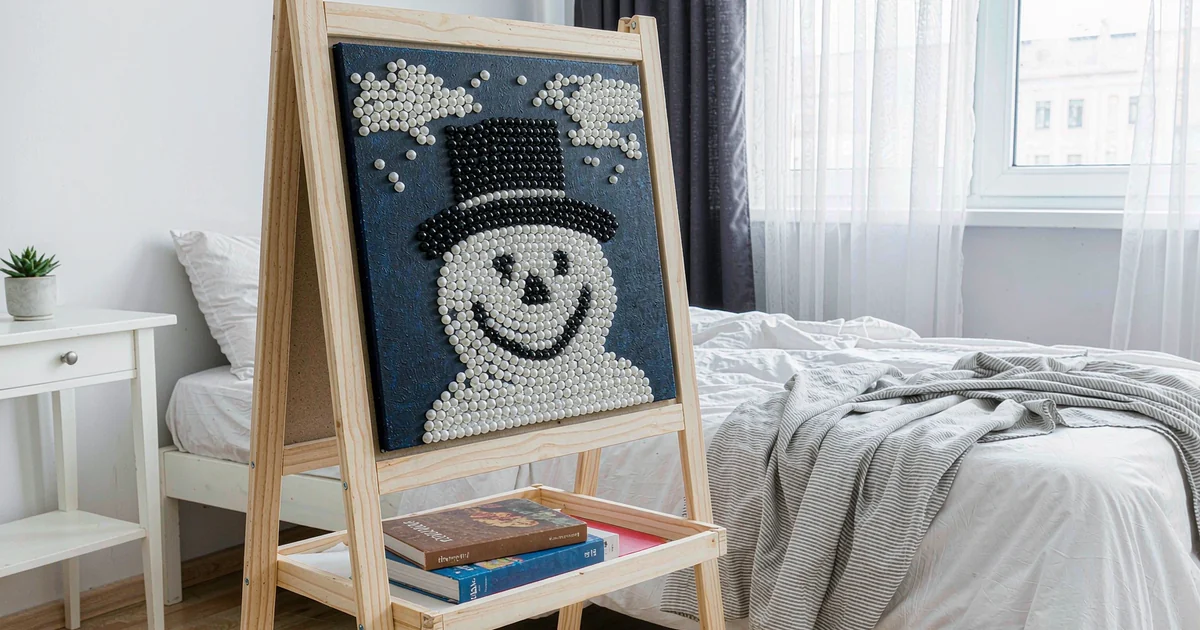
Christmas tree and snowman designs dominate the seasonal diamond painting catalog. They’re also the two designs beginners most often pick wrong.
The reason is that they look equally easy and aren’t. A Christmas tree design is a structural pattern — layered, detailed, often dense with ornamentation, frequently including a star, garland, and baubles that each need their own color region. A snowman design is a silhouette pattern — large, high-contrast, few colors, forgiving of imprecision.
Same price. Same general theme. Very different experiences.
This guide compares the two families properly: what each is good at, where each fails, which canvas size suits each, and honest recommendations for who should buy which. If you’re choosing a design rather than a product, that’s the decision this article is built for.
For the broader seasonal catalog, see our Christmas diamond painting decor guide — this piece is specifically about the tree-vs-snowman choice.
| Factor | Christmas Tree Designs | Snowman Designs |
|---|---|---|
| Pattern type | Structural, layered | Silhouette, high-contrast |
| Typical color count | 25–40 | 15–25 |
| Visual complexity | High — detail-dense | Medium — large flat regions |
| Beginner difficulty | Moderate | Easiest |
| Forgiveness of error | Lower | High |
| Wall impact | Strong, festive, busy | Soft, warm, traditional |
| Works after December | Less so | Yes — reads as “winter” |
| Best canvas size | 12×12 in+ | 8×8 to 12×12 in |
| Typical time (beginner) | 6–9 hours | 4–6 hours |
| Best placement | Living room, entry, tree-adjacent | Mantel, guest room, shelf |
The pattern type is the root of every difference below.
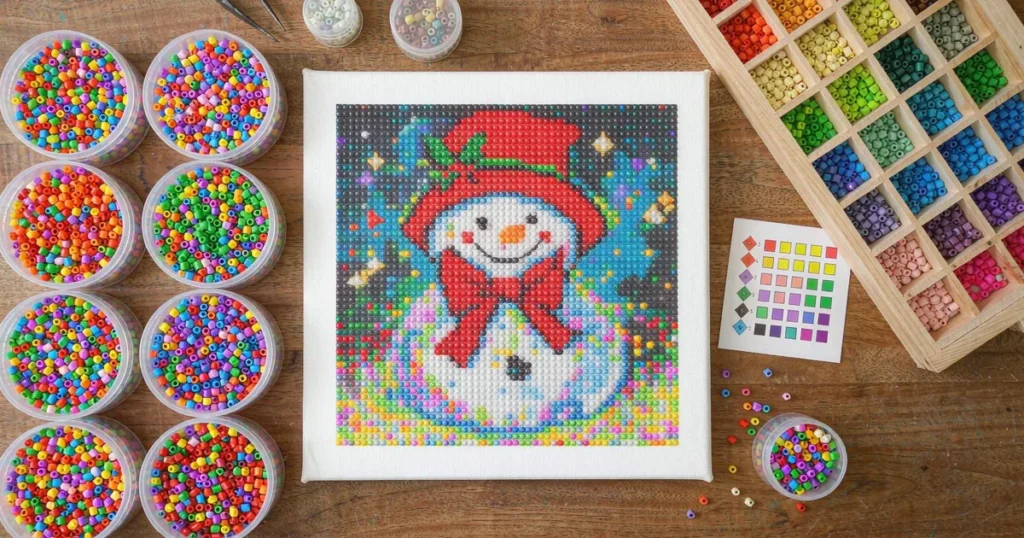
Christmas tree designs are built from many small elements — ornaments, tinsel lines, star, trunk, background. Each element has a boundary. Boundaries are where placement errors show. A tree design rewards precision and punishes impatience.
Snowman designs are large shapes with few internal boundaries. A white body on a dark background has essentially one edge that matters. Errors get absorbed.
Buy a Christmas tree design if:
Skip it if:
What to look for in a tree design:
Tree designs from the current collection:
Buy a snowman design if:
The snowman’s real advantage is longevity. A Christmas tree piece goes in a box on December 27. A snowman piece can stay up through February without looking like you forgot to pack it. If you decorate seasonally but decorate slowly, the snowman is the better buy by a wide margin.
What to look for in a snowman design:
Snowman designs from the current collection:
Getting the size wrong is the second most common mistake after design choice.
| Size | Christmas Tree | Snowman | Best For |
|---|---|---|---|
| Pendant (3–6 in) | ✅ Great | ✅ Great | Tree ornaments, entryway, gifts |
| 8×8 in | ⚠️ Too small for tree detail | ✅ Ideal | Shelf, nightstand, desk |
| 12×12 in | ✅ Ideal | ✅ Ideal | Mantel, wall, framing |
| 16×20 in+ | ✅ Full statement piece | ⚠️ Overkill | Large walls only |
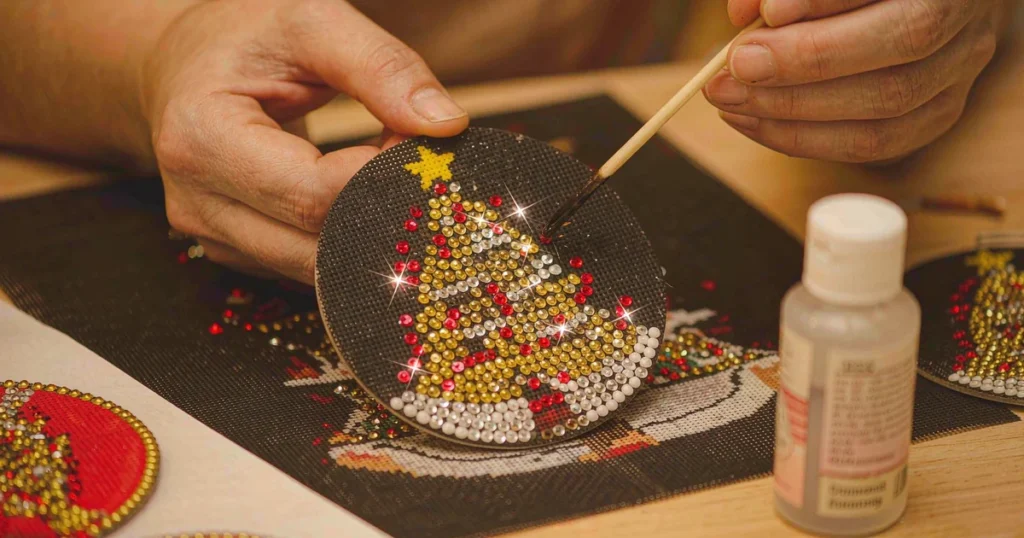
The rule: tree designs need size to carry their detail. Snowman designs do not — a small snowman works because the silhouette is legible at any scale, which is exactly why they’re the better ornament. Putting a detailed tree on a small pendant forces the design to compress, and the ornament detail turns to noise.
If you’re choosing right now:
Choose a Christmas tree design when the piece is for the room guests gather in, you want an unmistakable Christmas statement, and you’re either experienced or patient.
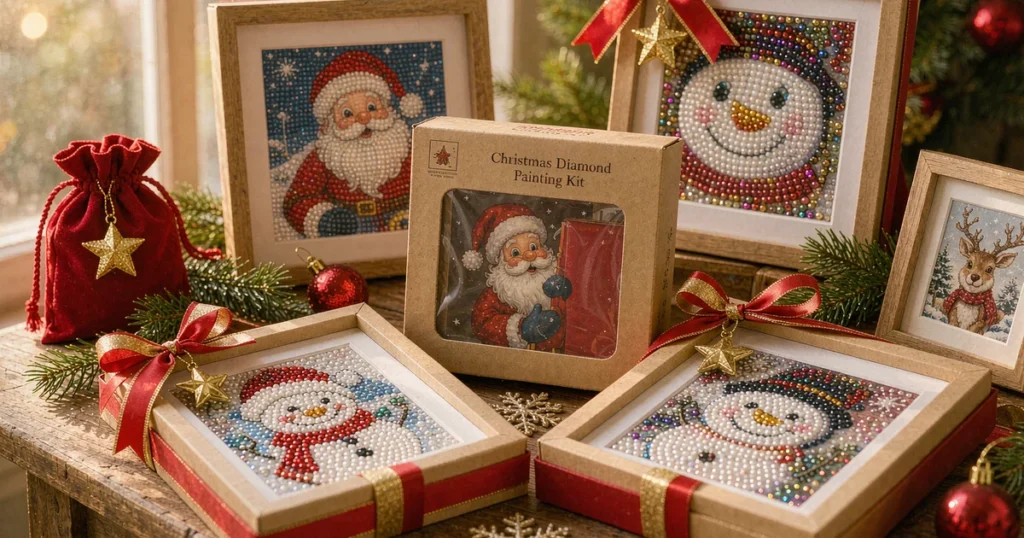
Choose a snowman design when it’s your first kit, you want the piece to survive past New Year’s, or you need something finished in two evenings.
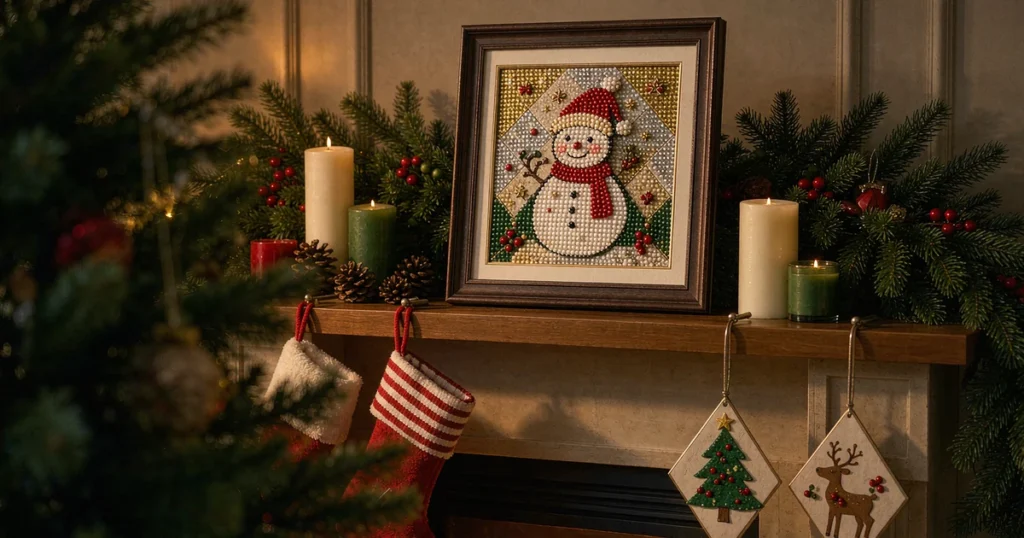
Choose both when you’re decorating a full room — a tree piece as the bold anchor and a snowman piece as the soft companion. This pairing works especially well on a mantel: the tree brings the festive punch, the snowman brings warmth, and the two read as intentionally coordinated rather than matching.
That combination is also the best-value approach to seasonal decorating: two pieces that carry a room, one of which you can leave up until spring.
Q: Which is easier for a beginner — a Christmas tree or a snowman? A: Snowman, clearly. Large high-contrast regions, fewer colors, forgiving of placement error. Tree designs are detail-dense and less forgiving.
Q: What’s the best canvas size for a diamond painting snowman? A: 12×12 in is the sweet spot — large enough to frame and display on a mantel, small enough to finish in 4–6 hours as a beginner.
Q: Can I leave a snowman diamond painting up after Christmas? A: Yes, and that’s the main argument for it. A snowman reads as “winter” rather than “Christmas,” so it works through February without looking out of place.
Q: How many colors should a beginner Christmas design have? A: Under 35, ideally under 25. Lower color counts mean less tray-switching and noticeably faster progress.
Q: Are pendant versions as good as full-size canvases? A: Different purposes. Pendants are ornaments and window pieces — small, light-catching, decorative. Full-size canvases are wall pieces. A pendant won’t have a tree design’s detail; a canvas won’t have a pendant’s light play.
Q: Should I buy pearl or regular drills for a snowman? A: Pearl, generally. The soft satin finish suits a snowman’s traditional look. Choose regular drills only if you specifically want a sparkly, glitter-forward piece.
Q: Can I use a Christmas tree diamond painting on a tree instead of a wall? A: Yes — the pendant form is designed for exactly that. Use a full-size canvas for a wall and a pendant for the tree.
The tree and the snowman aren’t competing designs — they’re different tools. The tree brings festive impact and needs space, detail tolerance, and time. The snowman brings warmth and longevity and is the most forgiving first project in the seasonal catalog.
Pick by room, by timeline, and by experience level. Then, if you’re building a room rather than a spot, pair them.
🎄 Browse the full Christmas collection to compare tree and snowman kits side by side, or explore pearl paintings for the softest finish on snowman designs.
Comparing tree and snowman options side by side? The Christmas collection page puts canvas, pendant and ornament forms next to each other, which makes the structured-versus-silhouette choice much easier.